In the year 2026 I am going to attempt to visit and catalogue as many parking garages as I possibly can.
This project is an extension of my work with concrete I think. While there is some good Brutalism in Philadelphia (which is always a rare treat to stumble upon), the bulk of the concrete that catches my eye on the daily basis is infrastructural. Sidewalks, retaining walls, highway support beams, sound isolation walls. And parking garages. As I have been walking around the city and observing concrete (like a mushroom hunter, my eyes are tuned to be on the lookout for my prize – interesting looking concrete) – I keep returning to garages.
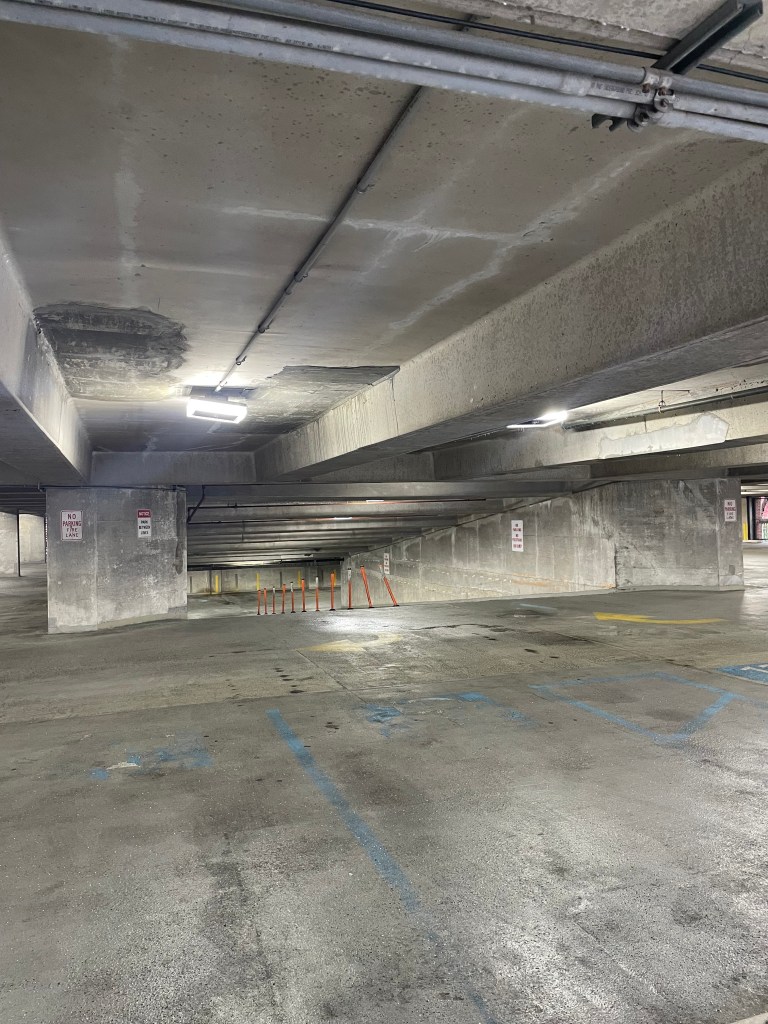
While sometimes some thought is put into the aesthetic of the building, in most cases they are very utilitarian. The form follows the function, and the function is to store as many cars as possible in the least expensive space imaginable. Ideally patrons don’t die of carbon monoxide poisoning from storing so many internal combustion engines and no one wants to pay for and maintain a complicated ventilation system – so these spaces barely have walls. This creates a space that feels simultaneously inside and outside.
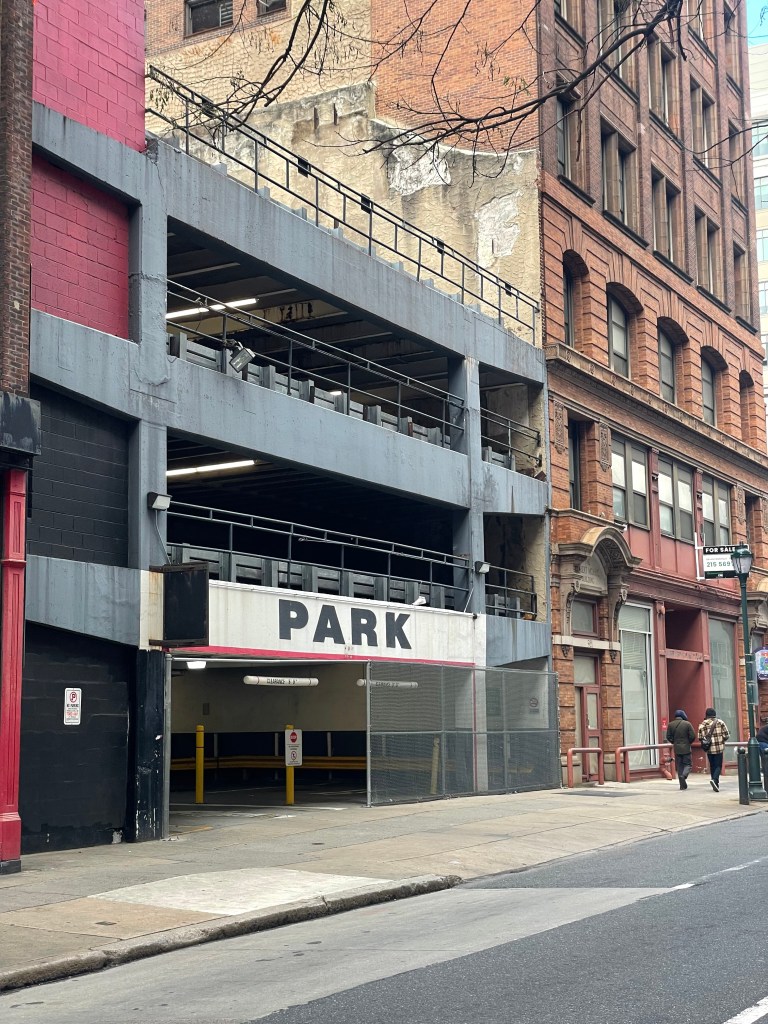
Parking garages also occupy an interesting grey area (yuk yuk yuk) between public and private spaces. They are almost always privately owned – even the ones you think are publicly owned are typically owned by opaque “private corporate structures” masquerading as a public entity. But what other building in a city can you just wander into, and roam freely throughout, including often, roof access!
I’m not the first person to view the parking garage as muse, I recommend checking out the Rhizome Parking Garage project or listening to the Drowned by Locals radio show on NTS who did a series of shows on music for parking garages.
 Fogazi